
“Beetlejuice, Beetlejuice, Beetlejuice!”: A Look Back at the Iconic Film
Released in 1988, Beetlejuice remains one of the most beloved and quirky films in Hollywood history. Directed by Tim Burton and starring Michael Keaton, Geena Davis, Alec Baldwin, and Winona Ryder, this darkly comedic fantasy has become a cult classic. Known for its bizarre characters, surreal special effects, and signature Burton gothic style, Beetlejuice continues to capture the imagination of audiences more than three decades after its debut.
The Plot: A Quirky Afterlife
The story begins with the tragic deaths of Adam and Barbara Maitland (played by Alec Baldwin and Geena Davis), a happily married couple living in a quaint New England town. After dying in a car accident, they find themselves trapped in their home as ghosts, unable to leave the property. Things go from bad to worse when a new family, the Deetzes, moves into their house. Charles (Jeffrey Jones) and Delia (Catherine O’Hara) Deetz, along with their goth teenage daughter Lydia (Winona Ryder), quickly begin transforming the Maitlands’ beloved home into a modern art nightmare.
Desperate to rid their house of the living, the Maitlands attempt to scare the Deetzes away, but their efforts fail miserably. Enter Betelgeuse (pronounced “Beetlejuice”), a crude, mischievous “bio-exorcist” played with manic energy by Michael Keaton. The Maitlands reluctantly summon Beetlejuice to help them, only to discover that he’s a chaotic trickster with his own agenda, leading to a series of bizarre and comedic events.
Michael Keaton’s Unforgettable Performance
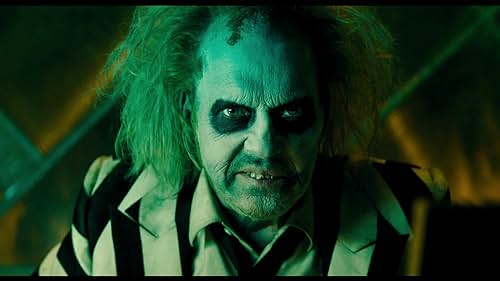
Michael Keaton’s performance as Beetlejuice is undoubtedly the heart of the film. Though he appears on screen for less than 20 minutes, his presence dominates the movie. With his disheveled appearance, ghostly pale skin, wild hair, and raspy voice, Beetlejuice is both repulsive and oddly charming. Keaton’s improvisational style and unpredictable antics bring the character to life, making him one of the most memorable antiheroes in cinema history.
Keaton’s Beetlejuice is a character who revels in chaos, blurring the lines between comedy and horror. Whether he’s delivering snarky one-liners, turning into a giant snake, or attempting to marry a teenage Lydia, Beetlejuice is always entertaining, unpredictable, and hilariously offbeat.
The Vision of Tim Burton
Beetlejuice is unmistakably a Tim Burton film. Burton’s signature gothic style, blending dark humor with whimsical fantasy, is evident in every frame. From the film’s twisted architecture to the surreal landscapes of the afterlife, Burton’s vision creates a world that is both eerie and enchanting.
The film’s art direction, led by production designer Bo Welch, plays a significant role in shaping its unique aesthetic. The Maitlands’ home transforms from a charming country house into a modernist nightmare filled with bizarre sculptures and surreal decor, reflecting the clashing personalities of the Deetzes and the Maitlands.
Burton’s love of stop-motion animation also shines through in Beetlejuice. The special effects, while dated by today’s standards, add to the film’s charm. The afterlife sequences, featuring sandworms, shrunken heads, and skeletal office workers, are playfully imaginative, reflecting Burton’s knack for creating darkly comedic visuals.
The Music of Danny Elfman
Adding to the film’s offbeat atmosphere is the memorable score aztec88 slot by Danny Elfman, a frequent Burton collaborator. Elfman’s music, with its quirky, carnival-like rhythms, perfectly complements the film’s mix of the macabre and the playful. The score is instantly recognizable and has become a hallmark of Elfman’s work with Burton, helping to set the tone for much of the director’s later films.
The soundtrack also includes memorable scenes featuring the music of Harry Belafonte, including the now-iconic dinner party sequence where the characters are possessed and dance to “Day-O (The Banana Boat Song).” This combination of musical elements adds to the film’s unique, whimsical charm.
Cult Status and Legacy
Beetlejuice was a box office success upon its release, grossing over $73 million on a budget of $15 million. It went on to win the Academy Award for Best Makeup, thanks to the impressive work that transformed Michael Keaton into the ghoulish Beetlejuice. However, it was over time that the film truly gained its cult status, as fans fell in love with its quirky characters, bizarre humor, and unique visual style.
The film’s popularity led to an animated television series, which ran from 1989 to 1991, as well as a long-discussed sequel, which has been in development limbo for years. The film also inspired a successful Broadway musical, which debuted in 2019 and garnered praise for its faithful yet inventive adaptation of the story.
Beyond its direct adaptations, Beetlejuice has left a lasting impact on pop culture. The character of Beetlejuice, in particular, remains iconic, with his image regularly appearing in Halloween costumes, merchandise, and fan art. The film’s influence can be seen in many of Tim Burton’s later works, from The Nightmare Before Christmas to Corpse Bride, all of which embrace a similar blend of gothic aesthetics and dark comedy.
Conclusion: A Timeless Classic
Beetlejuice stands as a testament to the unique vision of Tim Burton and the unforgettable performance of Michael Keaton. Its blend of dark humor, surreal visuals, and eccentric characters has ensured its place in the pantheon of cult classics. Decades after its release, Beetlejuice continues to enchant new generations of viewers with its oddball charm, proving that the ghost with the most will never truly fade away.
So go ahead, say his name three times—Beetlejuice, Beetlejuice, Beetlejuice!